Free to use
Infographics & findings
Our honest, checkable backyard-chicken findings, as clean shareable graphics. Free to use on your own site, blog, or newsletter — just keep the credit link. Copy the embed code under any graphic. Writing about one of these? Get in touch — happy to share the underlying research.
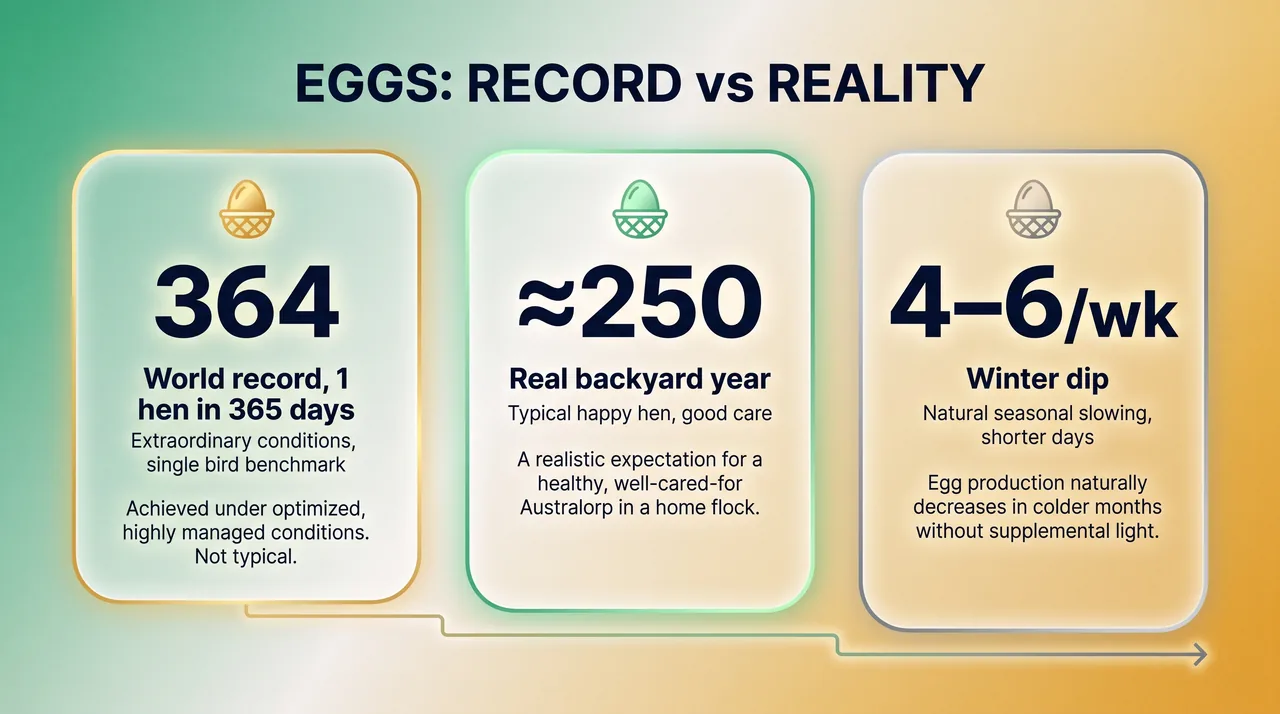
The 364-egg record is real. Your backyard number isn’t.
The Australorp holds the world laying record — 364 eggs in 365 days — and every breed listing repeats it. In an ordinary backyard, a healthy hen lays closer to 250 a year, and fewer in winter. Both numbers are true; only one is a plan you can feed a family on.
Read the full finding →<a href="https://www.thechickengeek.com/australorp/">
<img src="https://www.thechickengeek.com/wp-content/uploads/2026/07/australorp-info-2.webp" alt="Infographic comparing the Australorp egg record of 364 with the realistic backyard average of about 250 and the winter dip" width="640" style="max-width:100%;height:auto">
</a>
<p><small>Infographic by <a href="https://www.thechickengeek.com/australorp/">The Chicken Geek</a></small></p>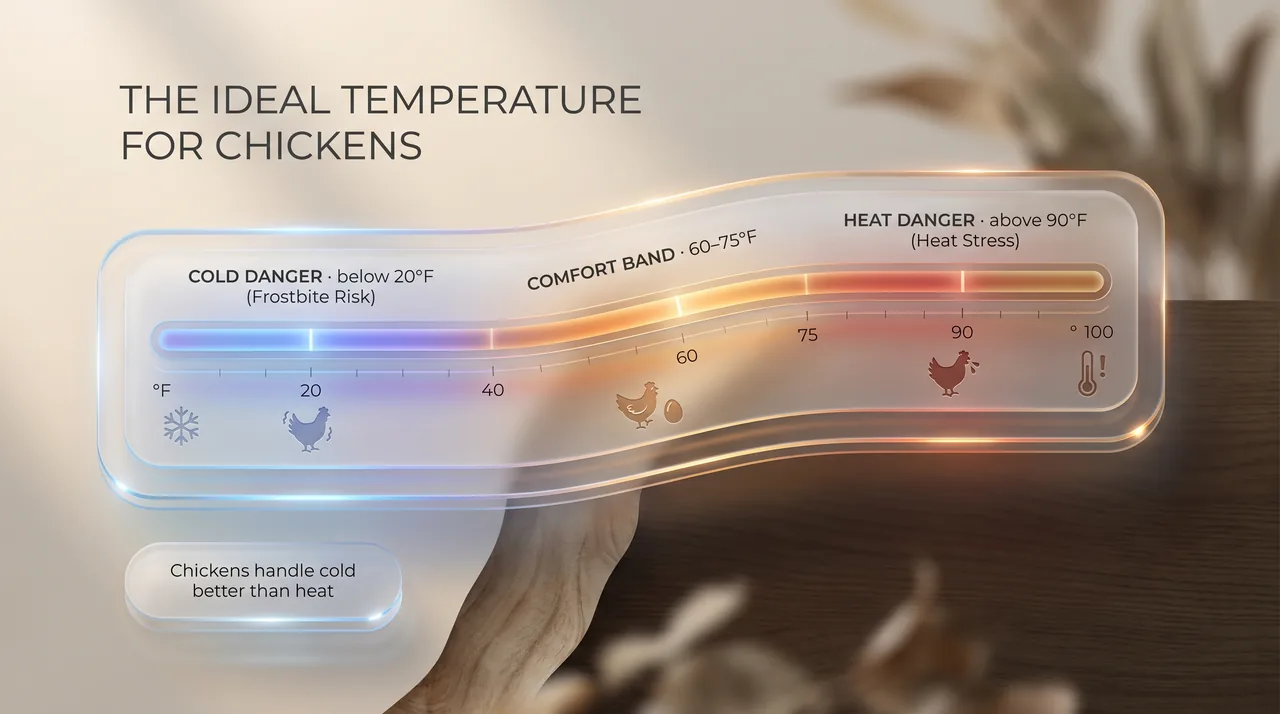
Chickens handle cold far better than heat.
Almost every guide obsesses over how cold a hen can survive. But a healthy chicken is comfortable from about 60–75°F and copes with freezing far better than with heat — real danger climbs fast above 90°F, where heat stress can be fatal. The thermometer alone isn’t the risk; damp, wind, and heat are.
Read the full finding →<a href="https://www.thechickengeek.com/knowing-ideal-temperature-for-chickens/">
<img src="https://www.thechickengeek.com/wp-content/uploads/2026/07/knowing-ideal-temperature-for-chickens-info-1.webp" alt="Temperature gauge infographic showing chickens’ comfort band of 60–75°F between cold-danger below 20°F and heat-danger above 90°F" width="640" style="max-width:100%;height:auto">
</a>
<p><small>Infographic by <a href="https://www.thechickengeek.com/knowing-ideal-temperature-for-chickens/">The Chicken Geek</a></small></p>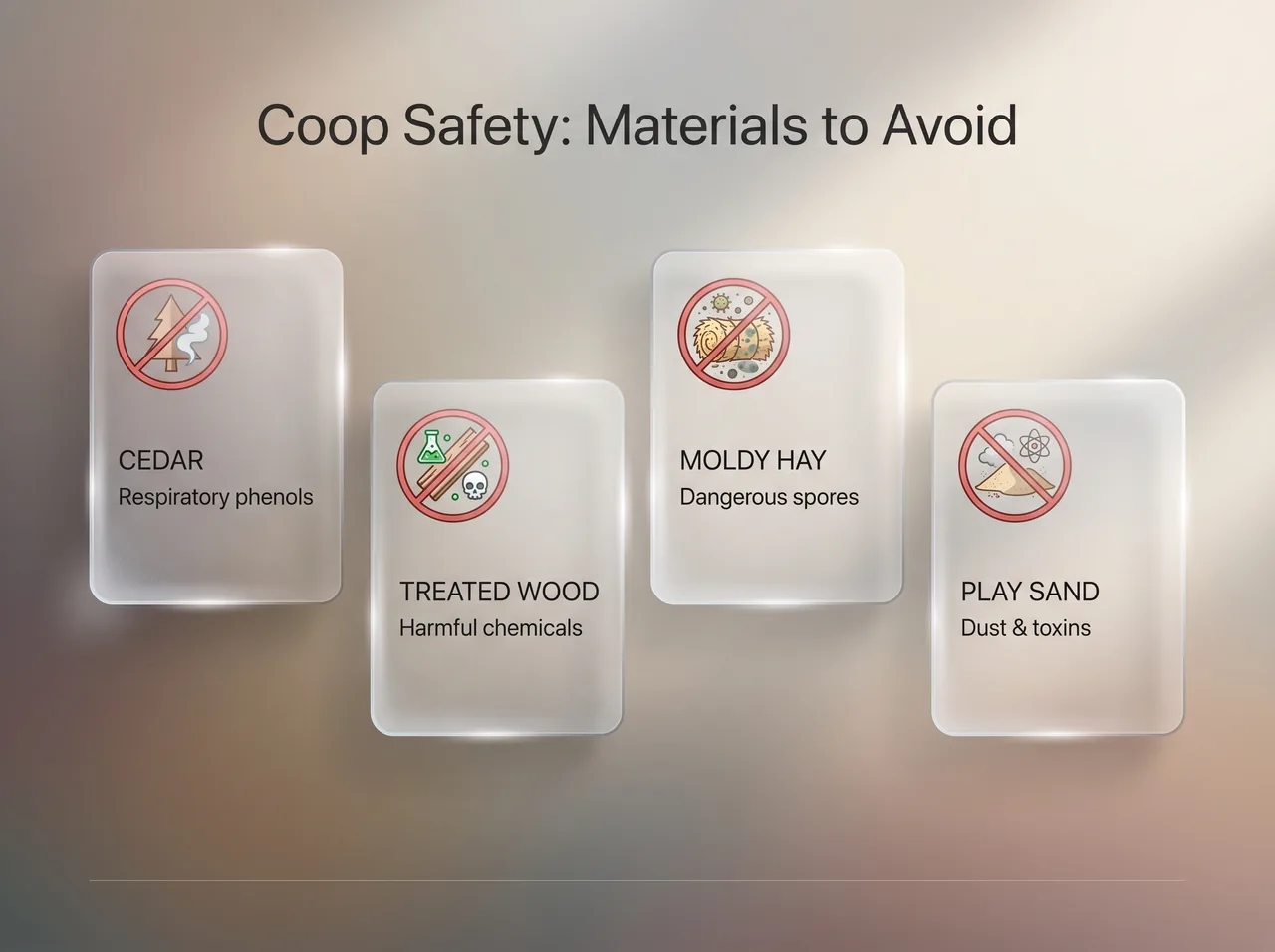
Four popular coop beddings can quietly harm your flock.
Cedar shavings, pressure-treated wood, mouldy hay, and fine play sand all turn up in coops — and all carry a real cost: respiratory irritation, toxins, mould spores, or impaction risk. Knowing what to keep out of the coop matters as much as what to put in.
Read the full finding →<a href="https://www.thechickengeek.com/best-chicken-coop-bedding/">
<img src="https://www.thechickengeek.com/wp-content/uploads/2026/07/best-chicken-coop-bedding-info-2.webp" alt="Safety infographic of four bedding materials to avoid in a chicken coop — cedar, treated wood, moldy hay, and play sand" width="640" style="max-width:100%;height:auto">
</a>
<p><small>Infographic by <a href="https://www.thechickengeek.com/best-chicken-coop-bedding/">The Chicken Geek</a></small></p>More findings are turned into graphics as new guides ship. Browse the full library of breed and care guides.