Sumatra Chickens: The Honest Guide to Keeping a Flighty, Long-Tailed Showpiece
Here's what the hatchery photo won't tell you: the Sumatra is one of the most beautiful birds you can put in a backyard, and one of the least practical. That glossy, beetle-green-black plumage and the long, sweeping tail are the whole appeal — but this is a strong-flying, jungle-heritage bird that clears fences, roosts high, and lays maybe one small egg a week, if that. It's a showpiece, not a workhorse. Kept for beauty, not the basket. If you want that living ornament in your coop and you're willing to build the space it needs, few birds reward you like a Sumatra. This is the honest guide to what they're really like: the flight, that tail, the true egg numbers, and what keeping one actually takes.
Sumatra chickens at a glance
| Origin | The island of Sumatra, Indonesia — jungle-fowl heritage |
| Type | Ornamental / exhibition breed; a rare heritage breed |
| APA recognized? | Yes — Black is the original variety; Blue also recognized |
| Appearance | Lustrous beetle-green black; long, low-flowing tail; pea comb; dark "gypsy" face and legs |
| Signature quirk | Roosters often carry multiple spurs per leg — a real breed hallmark |
| Egg colour / size | Off-white / whitish, and small — not a heavy-breed egg |
| Eggs — hatchery claim vs reality | Marketed around ~100/year; realistically closer to one a week (~50), and not guaranteed |
| Temperament | Highly active, alert, flighty; a strong flier — not a lap bird |
| Broodiness | Strong, reliable broodies and excellent mothers |
| Hardiness | Notably hardy |
| Good for beginners? | No — an ornamental for keepers who value a true breed |
What is a Sumatra, exactly?
The Sumatra is an ornamental breed — bred and kept for beauty and exhibition, not eggs or meat. It takes its name from the island of Sumatra in Indonesia, where its jungle-fowl ancestors ran half-wild, and it reached the West in the mid-1800s. Today it's a genuinely rare heritage breed; you'll find the Sumatra among the traditional breeds tracked by The Livestock Conservancy, which is part of what makes keeping one feel like preserving something rather than just buying a bird.
It's recognized by the American Poultry Association, with the beetle-green Black as the original and best-known variety and a Blue variety also standardized. What you're buying, in short, is one of the closest things in the backyard world to a living piece of jungle — and it behaves like it.
Appearance: why people fall for them
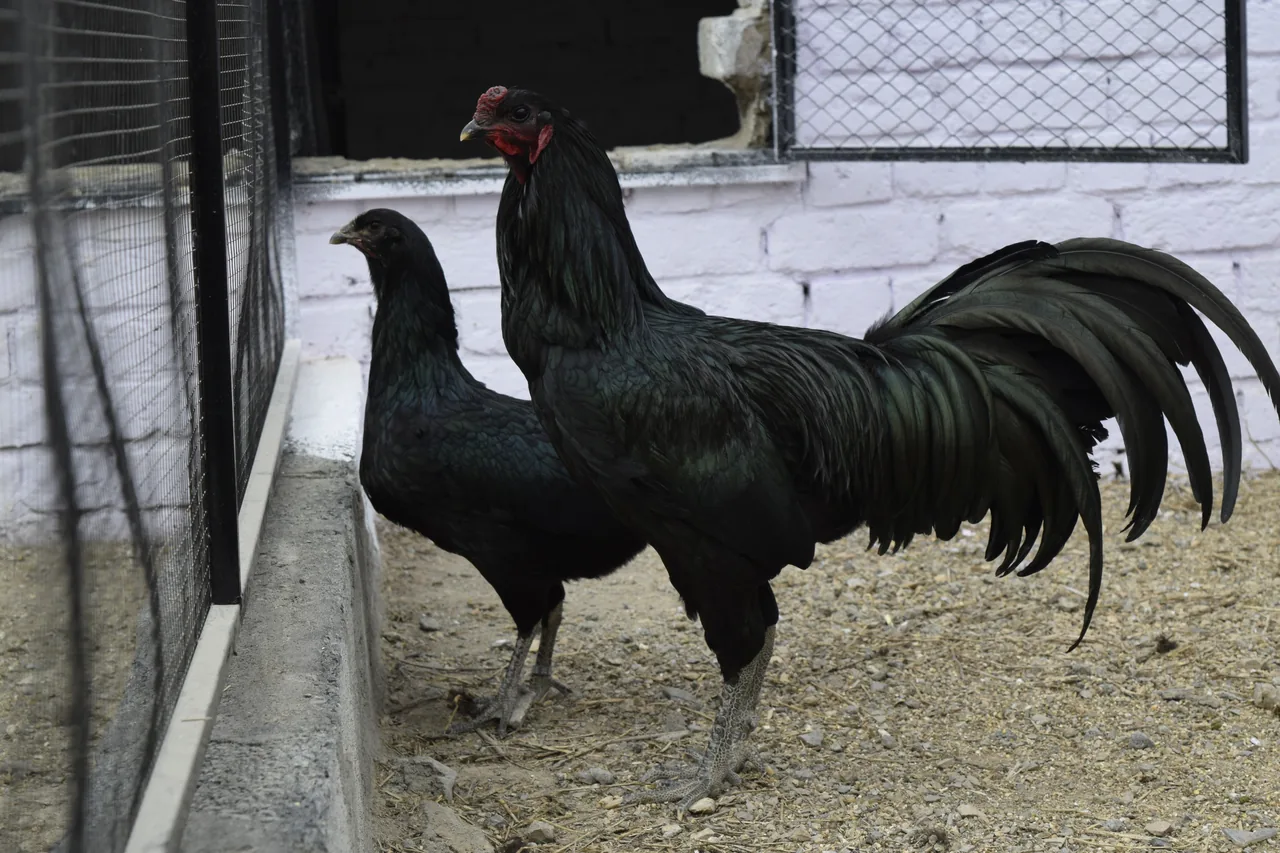
Everything about the Sumatra is built for the eye. The plumage is a deep black with a lustrous beetle-green sheen that flares in sunlight; the tail is long and carried low, flowing rather than upright; the face, comb, and legs run dark — the "gypsy" colouring that gives the breed its brooding, almost mythical look. Combs are a small pea comb, keeping the silhouette clean and the head close to that wild jungle-fowl type.
Two details set knowledgeable keepers apart. First, the multiple spurs: Sumatra roosters commonly grow more than one spur per leg — a breed hallmark you won't see on most chickens. Second, patience: that showpiece tail takes time, and a young bird is not yet the bird it will become.
🐔 From our coop
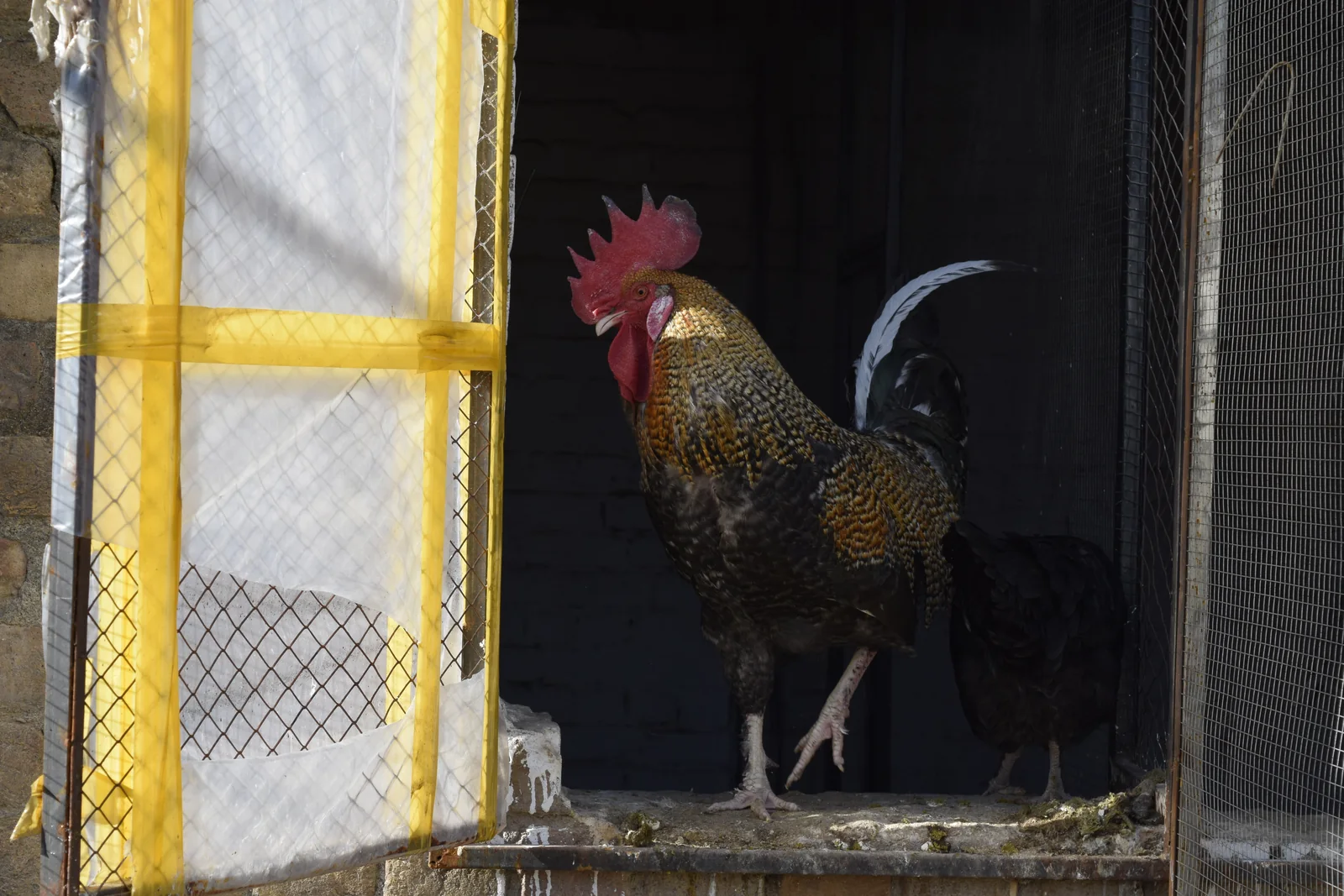
Ours have that robust, natural build — worth a sight, and not a heavy bird; the rooster with his long tail is genuinely the standout of the coop. One honest note on the photo: his tail still isn't fully grown. We deliberately let ours mature slowly and naturally rather than rushing them to full age the way you might push some other breeds — and with a Sumatra that patience is the whole point. And yes, our hens show all the traits the breed is known for.
Can Sumatras fly? (yes — really)
This is the fact that catches new owners off guard. Sumatras are strong, capable fliers — light-framed, athletic, and perfectly happy to roost high or clear a fence that would contain almost any other backyard breed. A standard waist-height run is not a boundary to a Sumatra; it's a launch pad. They are also highly active and alert, and that flightiness sharpens under stress. This isn't a docile bird you scoop off the grass — it's a bird that needs its flight designed into your setup, not fought against.
🐔 From our coop
Here's what we've learned: the flying isn't a discipline problem, it's a stress signal. They're highly active and go flighty under stressful conditions — and the fix isn't a taller pen, it's the opposite. Give them real open space and let them free-range rather than boxing them into a small run, and they settle. We've built them good open spaces plus a few high "leisure" perches they love, and a calm, well-spaced bird is a bird that stays put. Keep them happy and the fence stops being a fight.
Longtail care: what a Sumatra actually needs (that a standard bird doesn't)
This is the part no hatchery page will tell you, and it's the single biggest reason people either love their Sumatras or give up on them. A long-tailed, strong-flying, easily-stressed bird has different housing needs from a placid layer — and if you plan for those up front, you skip almost every problem people report. Here's the honest comparison:
| What a standard chicken needs | What a Sumatra actually needs |
|---|---|
| A modest run at waist height | Real open space or free-range room — confinement is where the stress and fence-clearing start |
| Low roosts | High perches and leisure spots — they want to get up high, and giving them that keeps them calm |
| Any predator-safe enclosure | A tall or covered run if you must confine them, because they will use the vertical space |
| Standard nest and floor | Room that protects that long tail — space to move without dragging or snagging it |
The pattern is simple: a Sumatra doesn't want more containment, it wants more room and more height. Design for an active, airborne, long-tailed bird and it thrives. Try to keep it like a hybrid layer in a small pen and you'll spend your time chasing an anxious bird over a fence.
🐔 From our coop
If we're honest, this is the hardest thing about the breed — not the bird itself, but giving it the habitat it loves. They want open space and they'll fly over fences to get it. Once we stopped trying to contain them and instead built the space around what they actually want — room to range, high spots to perch — everything got easier. Get the habitat right and a Sumatra is one of the most rewarding birds you can keep.
Egg production: the honest number
Let's be blunt, because this is where people get disappointed: you do not keep a Sumatra for eggs. Hatchery listings tend to imply around a hundred small white eggs a year, but the lived reality with well-kept birds is lower and less predictable than that. If eggs are your goal, this is the wrong breed — a good all-rounder like the Australorp or a colourful Olive Egger will fill your basket many times over. The Sumatra earns its keep on looks.
🐔 From our coop
We would not recommend a Sumatra for eggs. Ours lay maybe a single egg a week — and even that isn't guaranteed. The eggs are off-white to whitish and small, nothing like the eggs you'd get from a heavy breed. If you go in expecting a layer, you'll be let down; go in for the bird itself and the odd egg is a bonus.
Broodiness and mothering
Here's the flip side of that thin egg count, and it's a genuine strength: Sumatras are outstanding broodies and mothers. Where many modern laying breeds have had the broodiness bred out of them, the Sumatra keeps the full instinct — a hen that will sit tight, hatch a clutch, and raise it with real competence. For keepers who want natural incubation rather than running an incubator, that's a real asset.
🐔 From our coop
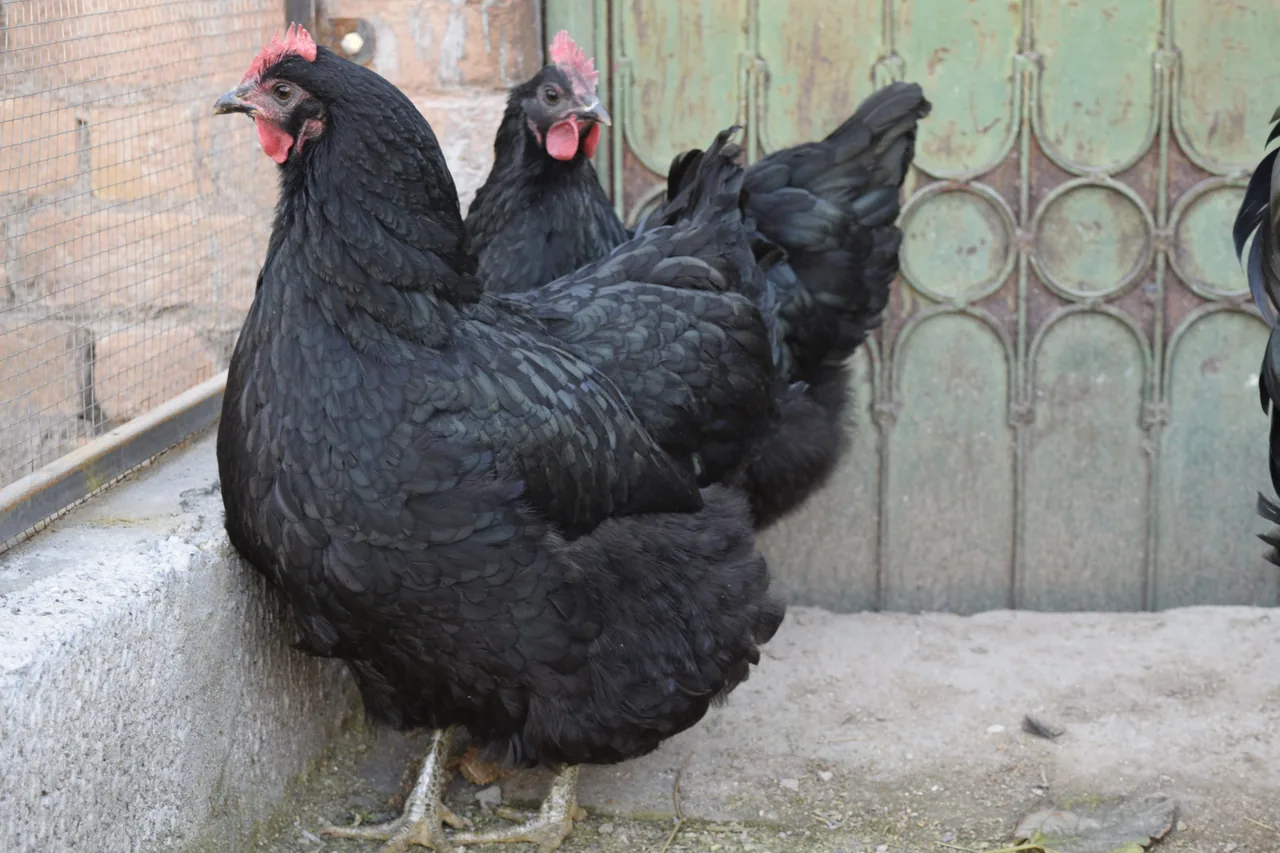
Our hens are strong broody mothers — no exaggeration. Our rule of thumb: if you want a natural hatch, a Sumatra hen is who you hand the eggs to. What they lack in laying they more than make up for in sitting.
Hardiness, and who a Sumatra is really for
For a bird this ornamental, the Sumatra is surprisingly tough — notably hardy, an athletic, jungle-descended breed that handles life outdoors well when its space needs are met. But hardiness doesn't make it easy, and it doesn't make it a starter bird. The Sumatra asks for space, calm, and an owner who reads their birds — which is exactly why it's a poor first choice and a wonderful second or third one.
🐔 From our coop
The best things about them are their look, their aura, and their hardiness — genuinely hardier than a lot of breeds we've kept. We always keep our breeds separate so nobody gets stressed, and the Sumatras do best on their own terms. Who's this bird for? Someone who values a true, pure breed and wants a real ornamental in the coop — not someone chasing eggs, and not a beginner.
If you're picking a genuine first flock instead, a calm, forgiving all-rounder like the Australorp is a far kinder place to start — and once you've got the reading-your-birds skill down, come back for the Sumatra. For the wider picture on keeping any flock comfortable through heat and cold, our guide to the ideal temperature for chickens covers what actually matters.
Frequently asked questions
Can Sumatra chickens fly?
Yes — strongly. They're light, athletic fliers that roost high and clear ordinary fences easily. A standard waist-height run won't contain them; they need real space, high perches, or a tall/covered run.
How many eggs do Sumatras lay?
Very few. Realistically around one small egg a week, and not guaranteed — well below the ~100/year some listings imply. They're kept for looks, not eggs.
What colour eggs do Sumatras lay?
Off-white to whitish, and small — noticeably smaller than a heavy-breed egg.
Are Sumatra chickens good for beginners?
No. Between their flightiness, their need for space, and their thin laying, they suit an experienced keeper who wants an ornamental — not a first-time owner after easy eggs.
Do Sumatra roosters really have multiple spurs?
Yes — it's a genuine breed hallmark. Sumatra males commonly grow more than one spur per leg, unlike most chicken breeds.
Are Sumatras good mothers?
Excellent ones. They go broody reliably and raise chicks well, which makes them a strong choice for natural hatching despite laying so few eggs.
Are Sumatra chickens hardy?
Yes — they're a notably hardy, athletic breed that does well outdoors, provided they're given the open space and high perches they want.